AI & Technology ·
AI-Powered Marketing in 2026: What Every Business Needs to Know
Explore how artificial intelligence is reshaping digital marketing strategies and what businesses must do to stay competitive in the AI era.
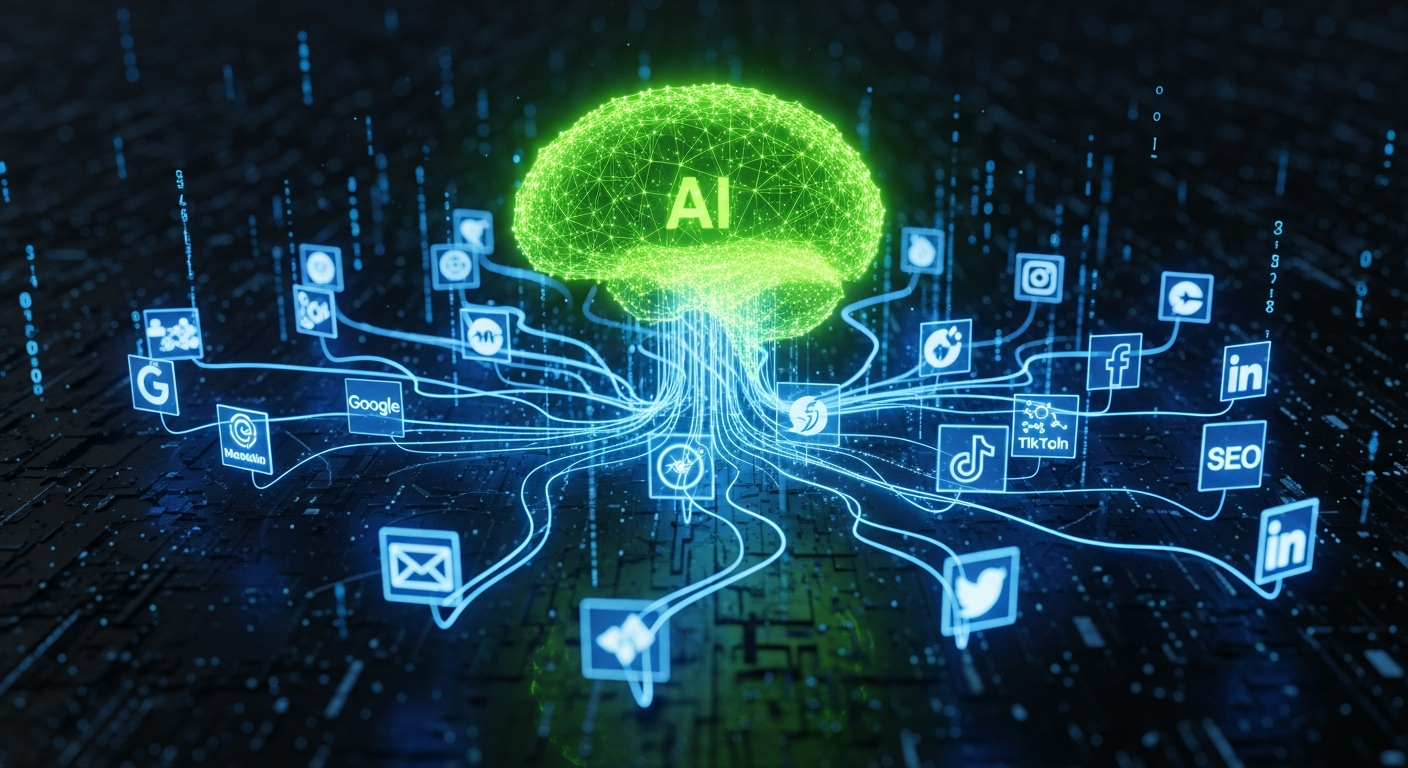
Introduction: AI Is No Longer Optional
In 2026, artificial intelligence is not a competitive advantage — it is the baseline. Businesses that have not integrated AI into their marketing operations are already falling behind. From automated content creation to hyper-personalized customer journeys, AI has transformed every layer of the marketing funnel.
As a digital marketing trainer who has worked with thousands of professionals across Jordan, UAE, and Saudi Arabia, I have seen the shift happen in real time. The businesses that thrive are the ones that treat AI as a strategic partner, not a tool to be feared.
How AI Is Reshaping the Marketing Landscape
1. Content Creation at Scale
AI tools like ChatGPT, Claude, and Google Gemini have made it possible to produce high-quality, audience-targeted content at a fraction of the previous cost and time. However, the key differentiator is not the tool — it is the prompt engineer behind it. Knowing how to instruct AI effectively separates average output from exceptional results.
2. Predictive Customer Analytics
AI-powered analytics platforms can now predict customer behavior with remarkable accuracy. By analyzing purchase history, browsing patterns, and engagement data, these systems allow marketers to intervene at exactly the right moment with the right message — dramatically improving conversion rates.
3. Automated Ad Optimisation
Google's Performance Max and Meta's Advantage+ campaigns now use machine learning to automatically adjust bids, creatives, and audiences in real time. Marketers who understand how to feed these systems with the right signals consistently outperform those who rely on manual optimisation alone.
4. Conversational Marketing & AI Chatbots
From WhatsApp bots to website assistants, conversational AI has compressed the customer service and lead nurturing cycle. Businesses in the MENA region, particularly in e-commerce and healthcare, are seeing significant reductions in response time and significant increases in qualified lead capture.
What Middle East Businesses Must Do Now
- Invest in AI literacy — Train your marketing team on prompt engineering and AI tool workflows. Generic AI knowledge is not enough; your team needs hands-on expertise.
- Audit your data infrastructure — AI is only as good as the data it is trained on. Ensure your CRM, website analytics, and ad platforms are properly connected and tracking correctly.
- Start with automation of repetitive tasks — Email sequences, social media scheduling, reporting, and ad copy testing are the easiest wins. Free up your team's strategic capacity.
- Build an AI-first content strategy — Use AI for ideation, first drafts, SEO optimisation, and translation. Always apply a human editorial layer for quality and brand voice.
The Bottom Line
The businesses winning in 2026 are not the biggest — they are the most AI-adaptive. Whether you are a pharmaceutical company, an e-commerce brand, or a professional services firm, the question is no longer whether to use AI in your marketing, but how quickly you can master it.
If you want to build a structured AI marketing capability within your organisation, explore our AI Productivity Training — designed specifically for marketing professionals across the Middle East.