AI in Healthcare ·
Artificial Intelligence Solves a Complex Scientific Puzzle in Two Days: A Breakthrough in Understanding Antibiotic Resistance
Google's 'AI co-scientist' replicated a decade of antibiotic-resistance research in just two days — uncovering the same mechanism behind how bacteria swap virulence genes. Here's why this breakthrough matters for pharma, healthcare, and the future of scientific discovery.
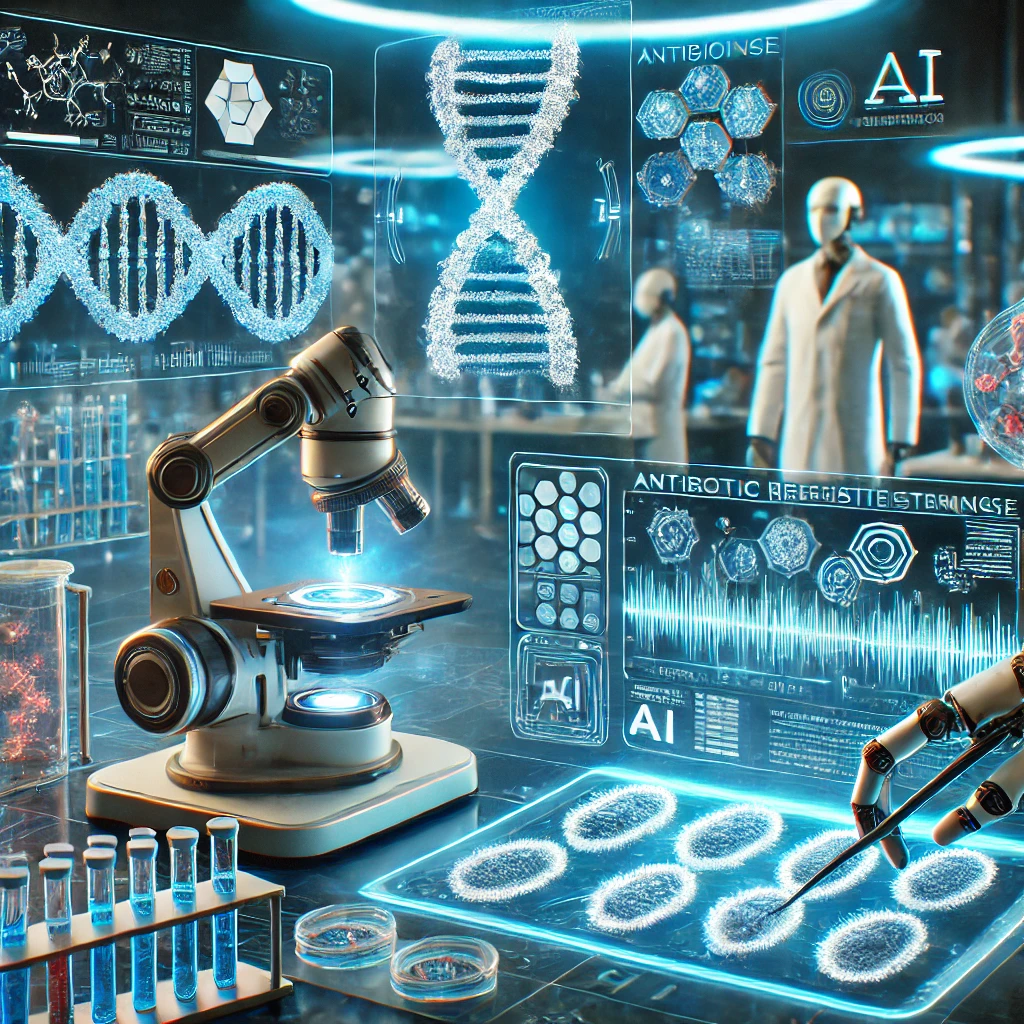
In an unprecedented scientific achievement, an artificial intelligence tool developed by Google — known as the "AI co-scientist" — managed to solve a complex puzzle about how certain bacteria develop resistance to antibiotics, a challenge that had taken a leading research team a full decade to crack.
Antimicrobial Resistance: The Silent Threat
Antimicrobial resistance (AMR) is considered one of the greatest global health threats of the modern era. It occurs when microbes — bacteria, viruses, fungi, and parasites — develop resistance to the drugs designed to kill them or inhibit their growth. The result is the loss of effectiveness of standard treatments, making infections harder to treat and increasing the risk of disease spread and death.
According to a 2019 report by the U.S. Centers for Disease Control and Prevention (CDC), drug-resistant bacteria were responsible for at least 1.27 million deaths globally that year, including 35,000 deaths in the United States alone — a 52% increase compared to the 2013 report, highlighting how rapidly this threat is evolving.
A Decade of Research: Understanding How Bacteria Acquire Resistance
A research team at Imperial College London, led by Professor José Penadés, spent ten years studying how some bacteria acquire antibiotic resistance. The team focused on a class of viruses that infect bacteria called "phage-inducible chromosomal islands" (PICIs). These viruses can borrow tails from other phages, enabling them to infect new types of bacteria. Years of experiments validated this hypothesis and revealed a previously unknown mechanism of horizontal gene transfer.
The Role of AI: Solving the Puzzle in Just Two Days
Before publishing their findings, the team decided to put Google's AI co-scientist to the test. In just two days, the AI generated several hypotheses — one of which matched, almost word-for-word, the conclusion the team had reached after a decade of research.
The result so astonished Professor Penadés that he contacted Google to ask whether the AI system had any undisclosed access to their research. Google denied any such access. The AI had reasoned its way to the same answer using only publicly available scientific literature.
Challenges in Using AI for Scientific Research
Despite the promising results, the use of AI in science is not without controversy. Some AI-assisted studies have been criticized for being non-reproducible, and there have even been documented cases of AI-driven scientific fraud. To minimize these risks, researchers are building tools to detect errors and biases in AI outputs and establishing ethical frameworks to safeguard the accuracy and integrity of results.
Looking Ahead: Accelerating Scientific Discovery
This achievement reflects the tremendous potential of AI to accelerate the pace of scientific discovery. Tools like the AI co-scientist can analyze vast amounts of data quickly, helping researchers overcome obstacles and shorten research cycles that might otherwise take years using traditional methods.
In conclusion, this development shows how technology can revolutionize scientific research and help tackle global health challenges like antimicrobial resistance. But it is equally critical that we deploy these tools responsibly — applying them ethically and reliably to deliver the best outcomes for humanity.
Why This Matters for Pharma and Healthcare Leaders in MENA
For pharma, biotech, and healthcare organizations across the MENA region, the message is clear: AI is not a replacement for scientific expertise — it is a force multiplier that can dramatically compress R&D timelines, surface non-obvious hypotheses, and reduce the cost of getting to clinical truth. Organizations that build the right data foundations, governance frameworks, and human-in-the-loop workflows today will be the ones leading tomorrow's discoveries.
If you are leading a pharma, hospital group, or life-sciences organization in Jordan, the UAE, KSA, or the wider region and want help designing an AI strategy that fits your reality, I'd love to talk.
Book a strategic consultation →
Written by Abdallah Battah — Pharmacist, Digital Marketing & AI Consultant, Healthcare Transformation Strategist.